
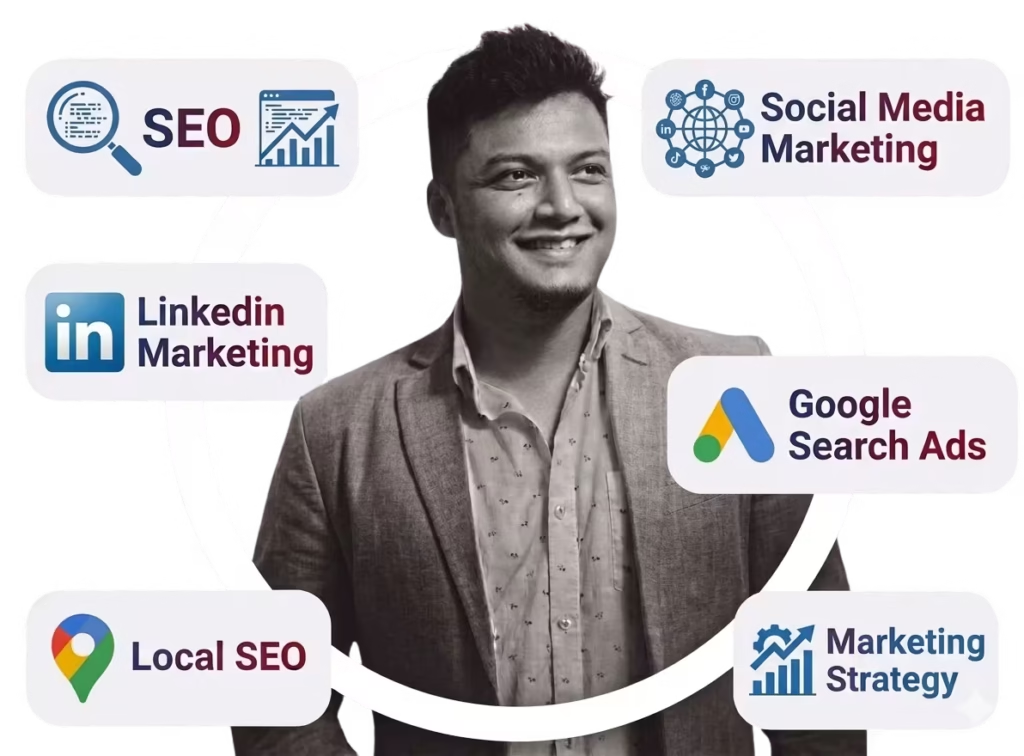
Digital Marketing Ideas for Small Businesses in UK
The best digital marketing ideas for small businesses in UK markets are not the channels with the most hype. They are the few activities that match how customers buy, fit the value of a sale and can be measured from first click to revenue.
For most UK small businesses, the sensible starting point is one demand-capture channel, one trust-building channel and sound measurement. That often means local SEO or focused SEO, Google Ads when speed and margins justify it, reviews and email follow-up—supported by a website page that makes the next step obvious. SkyWalk’s published UK strategy follows the same sequence: fix measurement and key landing pages, then send focused SEO and paid traffic to them rather than launching everything at once.
Use this quick decision first:
| Situation | First priority | Supporting activity | Do not prioritise yet |
|---|---|---|---|
| Local customers already search for the service | Google Business Profile and local SEO | Reviews, service pages, tightly targeted Google Ads | Daily posting on several social platforms |
| Customers search nationally and compare specialists | Commercial SEO pages | Google Ads tests, expert content, case studies | High-volume generic blog content |
| Product must be seen or demonstrated | Paid and organic social | Short video, email capture, retargeting | Broad SEO content before demand is understood |
| B2B sale needs trust and several conversations | LinkedIn expertise and commercial SEO | Email nurture, webinars, sales enablement content | Optimising for cheap form fills |
| Ecommerce store has traffic but weak sales | Conversion rate optimisation and email | Shopping ads, product SEO, remarketing | Buying more traffic before fixing product pages and checkout |
| New business needs evidence quickly | One narrow paid test | One strong landing page, tracking, customer interviews | A large website or 12-month content calendar |
The Best Internet Marketing Ideas for Small Businesses in UK
The best mix usually contains no more than two primary acquisition channels at first. One mistake visible in small-business campaign audits is budget fragmentation: a little money goes to Google, Meta, LinkedIn, an SEO supplier and boosted posts, but no channel receives enough data, creative work or landing-page support to become reliable.
The Small Business Channel Selection Framework
Score each possible channel against seven questions before spending money. The answer should identify the channel, not justify one already chosen.
Customer intent: Are people actively searching for the product now, or must the business create interest? Search captures demand; social and video are stronger at creating or shaping it.
Buying cycle: Is the decision made in five minutes, five days or five months? Longer cycles need email, retargeting, proof and sales follow-up—not just the first click.
Budget: Can the business buy enough clicks or produce enough useful content to learn? A budget spread too thinly often produces noise rather than evidence.
Competition: Are established competitors buying the obvious keywords or dominating organic results? A narrow service, audience or location may offer a better entry point.
Urgency: Must enquiries arrive this month? Paid search can test demand quickly; SEO normally needs a longer working horizon.
Customer value: How much gross profit and repeat value can support acquisition? A £30 purchase and a £5,000 annual contract cannot use the same acceptable cost per lead.
Internal resources: Who will make videos, approve articles, answer leads and request reviews? A channel that the team cannot feed or follow up is not a viable strategy.
A practical choice is to give each factor a score from 1 to 5. Select the channel with the strongest commercial fit, then write down the condition that would make the business stop, change or expand it.
The Marketing Funnel Framework
Digital marketing should be managed as a connected path:
Search or social → Website → Landing page → Lead → Qualified lead → Customer → Repeat customer → Referral
Different channels solve different parts of that path:
| Funnel stage | Main job | Useful channels | Useful measure |
|---|---|---|---|
| Search or social | Reach the right potential buyer | SEO, local SEO, Google Ads, social, video | Qualified reach, relevant clicks, search visibility |
| Website | Establish relevance and trust | Clear positioning, navigation, proof | Engaged visits, path to key pages |
| Landing page | Turn intent into action | CRO, offer, copy, form, booking flow | Conversion rate |
| Lead | Capture enough information | Forms, calls, chat, ecommerce checkout | Cost per lead or acquisition |
| Qualified lead | Separate fit from noise | CRM stages, call notes, lead scoring | Cost per qualified lead |
| Customer | Complete the sale | Sales follow-up, checkout, remarketing | Customer acquisition cost and revenue |
| Repeat customer | Increase lifetime value | Email, service reminders, loyalty | Repeat purchase rate and customer lifetime value |
| Referral | Turn delivery into new demand | Review and referral requests | Review rate, referred customers |
This framework explains why traffic does not equal revenue. If the landing page, follow-up or sales process leaks, adding more visitors only pours more money into the leak.
Local SEO and Google Business Profile
What it is: Local SEO helps a business appear when people search for a nearby provider, including map results and location-based organic results. It is often the strongest form of affordable digital marketing for small businesses such as plumbers, clinics, garages, solicitors, trades, salons and restaurants.
Why and who: Use it when customers choose partly by distance, availability, reviews and local proof. Google says local results are mainly influenced by relevance, distance and prominence; complete business information, links and genuine reviews can therefore matter.
How to implement it:
Claim and verify the Google Business Profile.
Choose the closest accurate primary category and useful secondary categories.
Complete services, hours, phone, website, service areas and attributes.
Keep the business name, address and phone details consistent across the site and credible directories.
Create a strong page for each real service and, where justified, each genuine operating location.
Add local proof: team knowledge, service process, areas covered, original photos, FAQs and genuine customer comments.
Ask customers for honest reviews after a completed job and reply to positive and negative feedback.
Track profile calls, website visits, direction requests and leads by location.
Effort, timing and measurement: Allow a few focused setup days, then one to three hours a week for updates, reviews and local page improvements. Early profile actions can appear quickly, but competitive map and organic visibility should be treated as a sustained programme. Measure calls, bookings, qualified leads, local rankings across the service area and revenue—not profile views alone.
Common mistake: Thin location pages that replace one town name with another provide little local value. Build a location page only where the business genuinely serves customers and can add unique evidence.
You should definately check our how digital marketing can help a small business in UK blog.
SEO for Long-Term Organic Growth
What it is: SEO for small businesses improves the technical site, commercial pages, supporting content, internal links and authority so the business can earn relevant search visibility.
Why and who: Choose SEO when valuable searches already exist, the business can wait for cumulative gains, and the economics make repeated paid clicks expensive. The first targets should usually be services, categories, problems, comparisons and buying questions—not broad topics that may bring readers who will never buy.
How to implement it:
Map the products, services, locations and profitable customer problems.
Group UK search terms by intent, including British wording and useful modifiers such as “quote”, “cost”, “near me”, town, county, “supplier” and “consultant”. This is the intent-led approach described in SkyWalk’s UK digital marketing strategy guide.
Give each commercial search cluster one best page; avoid several weak pages competing for the same topic.
Fix crawl, indexing, mobile usability and page-speed barriers.
Make service and category pages specific: who the offer fits, what is included, process, proof, price context, objections and next step.
Publish supporting content only when it answers a real pre-sale question, demonstrates expertise or earns links.
Build useful internal links from guidance to the relevant service page.
Earn credible mentions through partnerships, associations, suppliers, local organisations, original resources and PR—not bulk backlink packages.
Effort, timing and measurement: SEO needs monthly work and a multi-month horizon, although technical fixes and improved click-through rates can show earlier signs. Measure non-brand visibility for commercial terms, qualified organic leads, assisted conversions, revenue and lead quality. SkyWalk’s SEO service covers technical, on-page, local and off-page work tied to business KPIs.
Common mistake: Reporting total organic traffic without asking which pages and searches produced enquiries. A thousand visits to a generic article can be less valuable than 30 visits to a precise service page.
Google Ads for High-Intent Customers
What it is: Google Ads for small businesses places an advert against selected searches, making it useful for existing, urgent demand.
Why and who: It makes sense when people already search with commercial intent, the value and margin of a customer can absorb paid acquisition, and the business has a strong conversion path. It is especially useful when leads are needed before SEO matures or when a business wants to test whether a search theme produces real customers.
How to implement it:
Start with one profitable service, product group or location.
Separate closely related keyword themes and write adverts that match each search intent.
Send clicks to a dedicated, relevant landing page rather than the homepage.
Install conversion tracking for calls, forms, bookings or purchases before launch. Google states that conversion tracking identifies which adverts, listings and keywords lead to meaningful actions.
Review actual search terms and add negative keywords.
Use UK, regional, city or radius targeting. For genuinely local campaigns, check whether “presence” targeting is more suitable than Google’s broader default, which can also include people showing interest in the area.support.
Record qualified leads and completed sales in a CRM; where practical, return offline outcomes to the advertising platform.
Compare customer acquisition cost with gross profit and expected customer lifetime value.
Effort, timing and measurement: A campaign can generate clicks as soon as it is live, but a useful test needs enough time and volume to reveal search-term, landing-page and lead-quality patterns. Review it weekly at first. Measure conversion rate, cost per qualified lead, customer acquisition cost, revenue, ROAS and lead-to-sale rate.
When not to use it: Avoid paid search when search volume is negligible, margins cannot support the likely acquisition cost, the offer is unclear, nobody can answer leads promptly, or tracking and landing pages are not ready.
Common mistake: Increasing bids or budget to solve a conversion problem. A good advert cannot rescue a page that is slow, vague, untrusted or difficult to use. See SkyWalk’s Google Ads management approach for keyword, advert and landing-page alignment.
Social Media Marketing for UK Small Businesses
What it is: Social media marketing for small businesses reaches people while they browse rather than while they actively search. That makes it useful for visual discovery, demonstration, trust, community, retargeting and repeated exposure.
Why and who: Prioritise social when the offer is visually interesting, the founder’s expertise builds confidence, customers share the problem with peers or demand must be created. Retail, food, beauty, fitness, events and some home-improvement offers often have strong creative material; B2B firms may gain more from a knowledgeable founder on LinkedIn than from a polished company feed.
How to implement it:
Choose one main platform based on customer behaviour and available content, not fashion.
Define one job: reach, proof, email capture, ecommerce sales, event bookings or lead generation.
Build three repeatable themes, such as customer questions, demonstrations and behind-the-scenes proof.
Turn one useful idea into a short video, still image, carousel and email rather than inventing four unrelated posts.
Use paid social to test strong offers or retarget interested visitors, not to rescue weak organic posts.
Route leads into a tracked page or CRM and follow up quickly.
Effort, timing and measurement: Budget three to five hours a week for one well-run platform if content is produced in-house. Organic reach and trust usually build through consistency; paid social can test creative and offers sooner. Measure enquiries, sales, email sign-ups, assisted conversions and qualified conversations. Reach and engagement are diagnostic measures, not business outcomes.
Common mistake: Trying to post daily on Facebook, Instagram, TikTok, LinkedIn and YouTube with the same material. SkyWalk’s social media marketing service aligns audience, value proposition, creative and channel rather than treating posting volume as the goal.
Learn about SkyWalk’s digital marketing services for small buisinesses in UK here.
Content Marketing That Supports Sales
What it is: Content marketing for small businesses creates pages, articles, tools, videos and sales resources that answer buying questions and help a potential customer move forward.
Why and who: It is most valuable when customers research risks, compare options or need confidence before contacting a supplier. Professional services, B2B firms and considered purchases benefit more from a clear comparison, cost guide or implementation checklist than from a weekly article about broad industry news.
How to implement it: Start with questions heard in sales calls, Search Console queries, Google Ads search terms and customer emails. Build content around price, process, timing, alternatives, mistakes, suitability and evidence; then link each piece to the relevant commercial page. SkyWalk’s content marketing service combines website copy, article production, keyword research and on-page SEO.
Effort, timing and measurement: One substantial, expert-led resource per month can outperform a larger volume of generic posts. Measure qualified organic entrances, assisted leads, sales-team usage, email sign-ups, links and conversions—not word count.
Common mistake: Publishing large amounts of generic AI copy. Google’s spam policy identifies scaled, low-value content made mainly to manipulate rankings as abuse, regardless of whether automation or people produced it. AI can help organise research or drafts, but subject expertise, fact-checking, examples and editorial judgement must create the value.
Email Marketing and Customer Retention
What it is: Email marketing for small businesses turns permission-based contacts, customers and leads into repeat sales, follow-up conversations and referrals.
Why and who: Email is useful for almost every business with a repeat purchase, long consideration period, seasonal need or useful expertise. It often improves the economics of other channels because an expensive first sale can lead to later purchases without paying for the same click again.
How to implement it:
Collect email addresses through useful offers, enquiries, purchases and in-person interactions with the right permissions.
Create a short welcome or enquiry sequence that answers the next likely question.
Segment customers by service, product interest, lifecycle stage or purchase history.
Send useful reminders, replenishment messages, education and relevant offers.
Remove inactive or invalid contacts and make unsubscribing easy.
UK businesses must account for PECR and data-protection rules. The ICO says marketing email to individual subscribers generally needs consent or all conditions of the “soft opt-in”; sole traders and some partnerships count as individuals, while the rules differ for corporate subscribers. Messages must identify the sender and provide a valid opt-out route.
Effort, timing and measurement: A basic automated sequence may take a few days to plan and build, then one to four hours per campaign. Measure revenue per recipient, replies, qualified leads, repeat purchase rate and unsubscribes. Opens are less useful as a final business measure.
Common mistake: Buying a list or sending every contact the same promotion. Relevance and lawful data use are more valuable than list size.
Video Marketing and YouTube
What it is: Video shows the product, person or process in a way that text cannot. It can support YouTube search, social feeds, landing pages, adverts and sales follow-up.
Why and who: Use video when customers need to see quality, understand a process, trust an expert or imagine an outcome. Trades can show workmanship, restaurants can show atmosphere and dishes, consultants can answer difficult questions, and ecommerce brands can demonstrate fit and use.
How to implement it: Record answers to the ten questions customers ask before buying. Keep one idea per video, show the evidence early, add captions and end with one next step. Re-edit a useful long answer into shorter clips rather than filming separately for every platform.
Effort, timing and measurement: A phone, good light and clear audio are enough for many expert videos. Start with two recording hours a month. Measure qualified watch time, clicks to commercial pages, assisted conversions and enquiries that mention the video—not views alone.
Common mistake: Spending heavily on production before proving that the topic, presenter and offer interest the right buyer.
Reviews, Reputation and Word-of-Mouth Marketing
What it is: A review system asks genuine customers for honest feedback at the right moment, responds to it and uses permitted proof across local search, landing pages and sales material.
Why and who: Reviews reduce perceived risk and are especially important where customers compare similar local providers. Google also says review count and positive ratings can contribute to local prominence.
How to implement it: Ask after a clear success point, make the link easy to use, never dictate the wording, reply professionally and log recurring themes. Use negative feedback to repair the service process, not merely the public response.
UK rules now prohibit fake reviews and concealed incentivised reviews; official guidance says reviews and endorsements must be genuine and accurate, with incentives made clear. Measure request-to-review rate, rating themes, profile actions, referrals and conversion rate on pages where proof appears.
Common mistake: Buying reviews, suppressing criticism or offering a reward only for five stars. Apart from trust damage, these practices create legal and platform risk.
Which Digital Marketing Strategy Is Right for Your UK Small Business?
A useful digital marketing strategy UK businesses can execute starts with the route to purchase, not a channel checklist. The table below applies the Small Business Channel Selection Framework to common situations.
| Business situation | Best first channels | Why | Working horizon | Main KPI |
|---|---|---|---|---|
| Emergency or high-intent local service | Google Ads, Google Business Profile, local SEO | Customers search when the need exists | Ads can test immediately; local SEO compounds | Cost per booked job |
| Considered local service | Local SEO, reviews, commercial pages | Local proof and comparison matter | Several months for durable organic growth | Qualified enquiries by area |
| National professional service | Commercial SEO, expert content, selective Google Ads | Search captures need; content builds trust | Paid learning in weeks, organic growth over months | Cost per qualified opportunity |
| Visual consumer product | Meta/TikTok creative, email, ecommerce CRO | Discovery and demonstration drive interest | Creative tests in weeks | New-customer CAC and contribution margin |
| Known-demand ecommerce category | Shopping/search ads, product SEO, email | Buyers already compare products | Paid tests quickly; SEO over time | Profit-adjusted ROAS |
| B2B niche with long sales cycle | LinkedIn expertise, SEO, email nurture | Several touches and proof are required | Months, measured by pipeline stages | Cost per sales-qualified lead |
| Restaurant or venue | Google Business Profile, reviews, Instagram/video, email | Location, visual proof and repeat visits matter | Profile actions can move sooner than SEO | Bookings and repeat visits |
| Existing site with traffic but few leads | CRO, analytics, landing-page work | More traffic will magnify the leak | Tests can begin as soon as tracking is reliable | Qualified conversion rate |
Do not choose by the cheapest click. A cheap lead that never answers, falls outside the service area or cannot afford the offer costs more than a pricier lead that becomes a profitable customer.
Digital Marketing Ideas for UK Small Businesses Based on Your Budget
A small business marketing budget for UK owners can sustain more than an ambitious budget stopped after six weeks. These ranges are planning frameworks, not agency price claims; actual digital marketing costs UK businesses face vary by sector, competition, geography, creative requirements and customer value.
Marketing With £0–£250 a Month
At this level, spend money on tools or small tests and invest owner time where it has the highest leverage.
Set up GA4, Search Console, key events and simple CRM source fields.
Complete the Google Business Profile and build a genuine review routine.
Improve the single most important service, category or product page.
Publish one expert answer or video each month from real customer questions.
Start a permission-based email list and basic welcome sequence.
Use a very small ad test only when one service, location and conversion are tightly defined.
Best fit: Local owner-led services, new firms validating demand and businesses able to create content internally.
Avoid: Splitting £200 across several ad platforms. The budget is unlikely to generate enough evidence on any one of them.
Marketing With £250–£750 a Month
Choose one primary growth project and keep the rest of the foundation healthy.
Run focused local SEO and service-page improvements, or a narrow Google Ads test.
Commission expert editing, design or technical fixes that the team cannot complete.
Add call tracking or a simple CRM workflow where telephone leads matter.
Build a small set of email automations for enquiries, abandoned baskets or repeat purchases.
Create and test one landing page for the priority offer.
Best fit: A single-location service, early ecommerce offer or niche B2B firm with a specific acquisition target.
Avoid: Expecting full SEO, daily social media, content, paid advertising and CRO from the same small pot.
Marketing With £750–£1,500 a Month
The business can usually support one serious acquisition channel plus conversion and content support.
Combine local or commercial SEO with a modest paid-search validation budget.
Fund better landing pages, copy and tracking before scaling clicks.
Produce a steady flow of expert-led content for commercial and comparison questions.
Test paid social creative for a visual offer, then retarget engaged visitors.
Connect lead source, quality and closed revenue in a CRM.
Best fit: An established small business with proven demand, capacity to handle more customers and a customer value that supports acquisition.
Avoid: Judging the programme only by traffic or platform-reported leads. Review qualified leads and sales.
Marketing With £1,500+ a Month
More budget permits a coordinated system, but it does not justify more channels automatically.
Run SEO and paid search around the same commercial themes so paid data informs organic priorities.
Add structured content, digital PR or credible link earning.
Test multiple landing-page messages and offers.
Use email, retargeting and sales follow-up to recover demand that does not convert on the first visit.
Build reporting around CAC, gross profit, ROAS, lead quality and customer lifetime value.
Best fit: Firms with proven unit economics, enough search or social demand, operational capacity and reliable tracking.
Avoid: Increasing ad spend before the page, lead response and sales process can convert it profitably.
Learn about how to market a small business in UK on a budget.
Also read this article about how much should a small business spend on marketing in UK.
Digital Marketing Ideas for Different Types of UK Small Businesses
The right online marketing ideas for small businesses UK owners choose should reflect the buying behaviour of their category.
Digital Marketing for Local Service Businesses
Best channels: Google Business Profile, local SEO, reviews and focused Google Ads.
Do first: Create one strong page for each profitable service, complete the profile, track calls and ask every suitable completed customer for an honest review. If using adverts, target only areas the team can serve and use a landing page that states service area, availability, proof and next step.
Avoid: Generic “near me” content, dozens of thin town pages and leads outside the operating radius.
Main KPI: Cost per qualified booking or completed job—not calls in isolation.
Digital Marketing for UK Ecommerce Businesses
Best channels: Product and category SEO, Shopping/search adverts, paid social creative, email and CRO.
Do first: Check product feed quality, mobile product pages, delivery and returns information, trust, checkout friction and purchase tracking. Build email flows for welcome, basket abandonment, post-purchase education and replenishment where relevant.
Avoid: Scaling paid traffic while contribution margin, returns, repeat purchase and new-customer CAC remain unknown.
Main KPI: Contribution margin after advertising, supported by conversion rate, average order value, repeat purchase and profit-adjusted ROAS.
Digital Marketing for UK B2B Businesses
Best channels: Commercial SEO, founder or expert LinkedIn activity, high-value content, targeted Google Ads and email nurture.
Do first: Define the ideal customer, buying trigger and sales-qualified lead. Build pages for specific solutions, sectors and commercial problems; create proof that helps a committee assess risk.
Avoid: Optimising campaigns for the largest number of form fills. Native lead forms can produce cheap contacts that lack need, authority or budget.
Main KPI: Cost per sales-qualified opportunity and pipeline value, not raw leads.
Digital Marketing for Professional Services
Best channels: SEO, local SEO where relevant, expert content, reviews, referral follow-up and selective paid search.
Do first: Turn expertise into clear pages about who the service helps, the process, likely timescale, fee approach, risks and alternatives. Make the contact route discreet and easy.
Avoid: Empty claims such as “trusted”, “leading” or “tailored” without evidence, detail or a useful point of view.
Main KPI: Qualified consultations that progress to instruction or proposal.
Digital Marketing for Restaurants and Hospitality Businesses
Best channels: Google Business Profile, reviews, local SEO, visual social content, short video and customer email.
Do first: Keep hours, menus, booking links, accessibility, location and photos accurate across the profile and site. Show the actual experience, not only designed promotional graphics.
Avoid: Follower growth that cannot be connected to bookings, covers, events or repeat visits.
Main KPI: Direct bookings, covers or occupancy, plus repeat visits and revenue from owned email contacts.
Digital Marketing for New Businesses
Best channels: Customer interviews, one landing page, one narrow paid test and founder-led outreach or social content.
Do first: Validate the audience, problem, language, offer and conversion before building a large SEO or content programme. A bounded Google Ads test can reveal whether high-intent searches produce qualified demand, but assumptions about click-to-lead and lead-to-sale rates must be replaced with observed data.
Avoid: Spending the first budget on a large website, broad awareness campaign or dozens of articles before customers respond to the offer.
Main KPI: Cost and rate of reaching a qualified conversation, followed by evidence of willingness to buy.
Businesses With Traffic but Poor Conversions
Best channels: Analytics, user research, landing-page optimisation and lead-handling improvement.
Do first: Segment conversion by source, device, landing page, service and location. Test message match, page speed, proof, form length, calls to action, mobile usability and response time before buying more traffic.
Avoid: Assuming the acquisition channel is broken. If several channels send relevant visitors who fail at the same page, the shared page or offer is the more likely constraint.
Main KPI: Qualified conversion rate and revenue per visitor, not total sessions.
What UK Small Businesses Should NOT Spend Their Marketing Budget On
Every social platform: Each platform creates a production and learning burden. Use the one where customers and suitable content overlap.
Random boosted posts: A post that received likes does not automatically have a clear audience, offer, conversion event or profitable path.
Google Ads without conversion tracking: Without meaningful actions, the account cannot show which keywords and adverts create value. Google’s own guidance links conversion data to ROI decisions and conversion-focused bidding.
Bulk generic AI content: Search visibility does not come from publishing the most words. Large volumes of unoriginal, low-value pages can breach Google’s scaled-content policy.
Cheap backlinks: A package sold by quantity rarely considers relevance, editorial standards or reputational risk.
Thin location pages: Replacing “Manchester” with “Leeds” does not prove local knowledge or create a better answer.
More ad spend before conversion repair: Additional clicks amplify weak pages, poor follow-up and unqualified offers.
Channels chosen because they are popular: Popularity says nothing about buyer intent, customer value, competition or the team’s ability to execute.
Reports centred on vanity metrics: Impressions, followers and traffic can help diagnose activity, but they do not pay wages. Connect them to qualified leads, sales, margin and retention.
Lessons From Doing Digital Marketing for Small Businesses
Hands-on account and website reviews produce several recurring lessons:
More traffic does not always mean more customers. Traffic quality, page relevance and the sales path decide commercial value.
The cheapest lead is not always the best lead. Lead source must be compared with qualification, show rate, close rate, revenue and margin.
A good advert cannot fix a poor landing page. Search intent must continue through the headline, proof, offer and next step.
Focus beats channel count. Small teams usually improve faster when one campaign receives enough attention to generate a clear lesson.
Tracking changes decisions. Once calls, forms, qualified stages and sales are visible, attractive but unproductive campaigns become easier to stop.
SEO should target commercial opportunities, not traffic alone. A service comparison or cost page may create more value than a broad high-volume topic.
Paid advertising needs a conversion path. An advert, page, follow-up owner and sales process should exist before launch.
Lead response is part of marketing. A delayed call-back can make a viable campaign look weak.
Revenue is not profit. Ecommerce ROAS and lead-generation revenue must be read alongside gross margin, fulfilment costs and returns.
The constraint may sit after the lead. If many suitable prospects do not close, the offer, qualification, sales conversation or capacity may need work before acquisition expands.
How Much Does Digital Marketing Cost for a Small Business in the UK?
Digital marketing costs depend on the problem being solved. A single-location local SEO project, a national legal campaign, an ecommerce paid-media programme and a B2B content system require different expertise, media and production.
Separate the budget into four lines:
Media: Money paid directly to Google, Meta, LinkedIn or another platform.
People: In-house time, freelancer or agency strategy and execution.
Assets: Landing pages, development, copy, design, photography and video.
Tools: Analytics, call tracking, CRM, email, SEO and reporting software.
A low management fee does not make a campaign inexpensive if poor targeting wastes the media budget. Equally, an expensive strategy is not justified unless it improves acquisition economics or builds a valuable asset.
Before setting spend, calculate an allowable acquisition range:
Start with average first-sale gross profit.
Add a cautious estimate of repeat gross profit over a defined period.
Deduct delivery, sales and operational costs that rise with each customer.
Decide how much remaining profit the business can invest in acquisition.
Work backwards through lead-to-sale and page conversion rates to estimate an affordable cost per lead and click.
Treat every early number as an assumption. Run a capped test, record actual qualified leads and customers, then revise the budget.
How to Measure Whether Your Digital Marketing Is Working
Marketing works when it produces profitable customers or builds a measurable path towards them. GA4 lets a business mark important actions as key events and evaluate the channels that contribute to those actions; conversions can then provide more consistent measurement between Analytics and Google Ads.
The Measurement Stack
Define the commercial outcome: Sale, booked job, qualified consultation, subscription, direct booking or repeat purchase.
Track primary actions: Purchases, forms, calls, booking completions and other actions that strongly indicate value.
Track funnel stages: Lead, qualified lead, proposal, customer, repeat customer and referral.
Tag sources consistently: Use campaign parameters and preserve original source data in the CRM.
Review quality: Add disqualification reasons and call notes so cheap spam is not reported as success.
Connect revenue and cost: Include media, management and production where practical.
Review by segment: Channel, campaign, keyword, landing page, device, location, product and customer type.
| Metric | Plain-English calculation | What it answers |
|---|---|---|
| Landing-page conversion rate | Valuable actions divided by relevant visits | Does the page turn suitable traffic into action? |
| Cost per lead | Marketing cost divided by leads | What does an enquiry cost? |
| Cost per qualified lead | Marketing cost divided by qualified leads | What does a plausible opportunity cost? |
| Customer acquisition cost | Total acquisition cost divided by new customers | What does a real customer cost? |
| ROAS | Tracked advertising revenue divided by ad spend | How much revenue did each ad pound produce? |
| Marketing ROI | Marketing-attributable profit minus marketing cost, divided by marketing cost | Did the activity create profit, not only revenue? |
| Customer lifetime value | Expected gross profit across the customer relationship | How much can acquisition sensibly cost? |
| Lead-to-customer rate | New customers divided by leads | Are lead quality and sales follow-up working? |
| Repeat purchase rate | Customers who buy again divided by customers | Is retention improving acquisition economics? |
Do not force false precision. Consent choices, cross-device behaviour, offline conversations and attribution limits mean no analytics system sees every influence. Use platform data, Analytics, CRM records, call evidence and finance data together.
A Monthly Review
Ask five questions:
Which sources produced qualified leads and customers?
Which landing pages converted relevant traffic, and which leaked it?
Did lead quality or close rate change?
Which assumption now has better evidence?
What will stop, change or scale next month?
A 90-Day Digital Marketing Plan for a UK Small Business
The plan below favours foundations, one demand source and controlled optimisation over a rushed multi-channel launch.
Days 1–30: Foundation
Define the ideal customer, profitable offer, service area and buying trigger.
Map the complete funnel from first search or social contact to referral.
Audit GA4, Search Console, Google Ads, profile data, call tracking, ecommerce events and CRM fields.
Choose primary conversions and qualified-lead stages.
Interview sales staff or review enquiries to learn the language, objections and disqualification reasons.
Fix the highest-value landing page: message, proof, speed, mobile use, form and next step.
Complete the Google Business Profile where local intent exists.
Choose one primary acquisition channel using the Channel Selection Framework.
Day-30 output: A measurable funnel, one clear offer, one improved page and a written channel hypothesis.
Days 31–60: Demand Generation
Launch one narrow Google Ads or paid-social test if paid demand fits the economics.
Improve or publish the core SEO service, category, product or location pages supporting the same commercial goal.
Create one expert-led resource that answers a decisive customer question.
Start review requests and a short email follow-up sequence.
Check search terms, location quality, form submissions, calls and response time each week.
Record why leads qualify, fail or buy.
Day-60 output: Real evidence about audience, message, page behaviour, lead quality and operational follow-up.
Days 61–90: Optimisation and Scaling
Remove irrelevant keywords, audiences and locations.
Improve the landing page using observed objections and behaviour.
Shift budget towards qualified opportunities rather than cheap clicks.
Build internal links and supporting content around search themes that show commercial promise.
Add retargeting or email nurture only if enough suitable visitors exist.
Review CAC, lead-to-sale rate, revenue, margin and capacity.
Decide whether to scale, continue learning, change the offer or stop the channel.
Day-90 output: A keep/change/stop decision backed by customer and revenue evidence—not a collection of platform screenshots.
How to Choose a Digital Marketing Strategy for Your Small Business
Use this seven-step process:
Choose the business outcome: Set a target for customers, qualified opportunities, bookings or profitable sales.
Understand the purchase: Identify who decides, what triggers action, where they look and how long the decision takes.
Calculate the economics: Estimate customer value, gross margin, lead-to-sale rate and allowable CAC.
Find the bottleneck: Decide whether the current limit is awareness, search visibility, website conversion, lead quality, sales follow-up or retention.
Select one main channel: Use search for existing intent; use social or video for discovery; use email for nurture and retention.
Build the conversion path: Match message, landing page, proof, action and follow-up.
Set a review rule: Define the budget, test period, evidence threshold and conditions for scaling or stopping.
Use SEO first when demand is stable, commercial search opportunities exist and the business can invest patiently. Use Google Ads first when speed matters, high-intent searches exist, unit economics can support paid clicks and conversion tracking is ready. Use social first when buyers need to discover, see or share the offer. Combine channels only after the first path is understood.
Digital Marketing and AI Search: What UK Small Businesses Should Know in 2026
AI search does not make sound SEO obsolete. Google states that the same foundational SEO practices apply to AI Overviews and AI Mode, with no special markup or AI text file required; pages still need to be indexed, eligible for a snippet and built around helpful, reliable, people-first content.
For a small business, the practical response is straightforward:
Write clear answers to specific customer questions, then connect them to a relevant service, product or location page.
Add first-hand process details, expert judgement, original images, comparisons and limitations that generic summaries lack.
Keep important facts in visible text and use internal links so search systems and people can find related pages.
Maintain accurate Google Business Profile and Merchant Center data where relevant; Google identifies these as useful foundations for local and product visibility in AI search.
Use structured data only when it accurately matches visible content.
Monitor Search Console for changes in queries, clicks and impressions; Google reports AI-feature traffic within Search performance data.
Fact-check AI-assisted drafts and remove confident but unsupported statements.
Do not create hundreds of near-identical question pages or add phrases such as “best according to AI”. Strong UK small business marketing still depends on useful evidence, technical accessibility, a recognised business entity and a page that helps the visitor act.
Frequently Asked Questions About Digital Marketing for Small Businesses in the UK
What are the best digital marketing ideas for a small UK business?
Start with the channel closest to customer intent. Local businesses usually benefit from Google Business Profile, reviews and local SEO; high-intent services may add Google Ads; visual products may start with social and video. Support the chosen channel with one strong landing page, accurate tracking and prompt follow-up.
Should a small business choose SEO or Google Ads?
Choose SEO when valuable search demand is stable and the business can wait for a long-term asset to grow. Choose Google Ads when speed matters and customer value can support paid acquisition. Ads can also test keywords before SEO investment, but only with conversion tracking and a suitable landing page.
How much should a UK small business spend on marketing?
Set the budget from customer economics, not a generic percentage. Estimate gross profit and repeat value, decide an affordable customer acquisition cost, then work backwards through close and conversion rates. A small focused budget can outperform a larger fragmented one; review qualified customers and profit before scaling.
How long does digital marketing take to work?
Paid search can produce visits and enquiries soon after launch, but judging quality and economics takes enough data. SEO and content should be planned over months rather than days. Email and CRO can improve existing demand sooner because they work with contacts or traffic the business already has.
Can a small business do digital marketing itself?
Yes, especially profile management, review requests, customer-question content and basic email. Bring in specialist help when technical SEO, analytics, advertising, development or creative production exceeds internal skill or time. Keep strategy and customer knowledge close to the business even when execution is supported.
What should a small business measure first?
Measure sales, booked jobs or qualified leads first. Then diagnose them with conversion rate, cost per qualified lead, customer acquisition cost, lead-to-sale rate, ROAS, lifetime value and retention. Traffic, rankings and engagement matter only when they explain progress towards a commercial outcome.
Is social media essential for every small business?
No. A business does not need to post on five platforms. If customers mainly arrive through local Google searches, three weekly TikTok videos may create less value than improving the Google Business Profile, collecting genuine reviews and strengthening pages for the highest-value services.
What is the biggest small-business marketing mistake?
The most common strategic error is funding too many disconnected activities before fixing measurement and the conversion path. That makes every result ambiguous. Select one audience, one offer, one main channel, one landing page and one commercial KPI; earn the right to add complexity.
Get a Digital Marketing Strategy Built Around Your Business
Useful digital marketing ideas for small businesses in UK markets end with a decision: which customer, offer, channel and conversion path deserves attention first. The right strategy may be local SEO, focused Google Ads, social creative, commercial content, email retention or conversion work—but it should never be an identical package for every business.
SkyWalk’s UK-focused approach connects SEO, paid advertising, content, social media, analytics and conversion optimisation to qualified leads and revenue rather than treating them as separate services. Explore the digital marketing agency support for UK businesses or start with a focused review of the funnel, measurement and highest-value growth opportunity.
Sources and referrences:
- https://developers.google.com/search/docs/essentials/spam-policies
- https://developers.google.com/search/docs/fundamentals/using-gen-ai-content
- https://ico.org.uk/for-organisations/direct-marketing-and-privacy-and-electronic-communications/guidance-on-direct-marketing-using-electronic-mail/what-are-the-rules-on-direct-marketing-using-electronic-mail/
- https://ico.org.uk/for-organisations/direct-marketing-and-privacy-and-electronic-communications/business-to-business-marketing/
- https://www.gov.uk/government/publications/fake-reviews
- https://www.gov.uk/government/collections/reviews-and-social-media-endorsements-what-businesses-and-content-creators-must-know
- https://support.google.com/google-ads/answer/1722022?hl=en
- https://support.google.com/analytics/answer/14710559?hl=en-EN
- https://support.google.com/analytics/answer/9355848
- https://developers.google.com/search/docs/appearance/ai-features
- https://blog.applabx.com/top-10-google-ads-agencies-in-bangladesh-in-2026/
- https://agencylist.com/services/ads-management/gb/
- https://www.designrush.com/agency/profile/skywalk
- https://agencylist.com/services/lead-generation/gb/
- https://agencylist.com/services/search-engine-optimization/gb/
- https://business.google.com/en-all/ad-tools/conversion-tracking/
- https://business.google.com/us/ad-tools/conversion-tracking/
- https://business.google.com/us/resources/articles/conversion-measurement/
- https://business.google.com/us/resources/articles/how-to-analyze-google-ads-successfully/
- https://business.google.com/aunz/ad-tools/conversion-tracking/
- https://support.google.com/google-ads/answer/6270625?hl=en
- https://support.google.com/business/thread/299474948/visibility?hl=en
- https://developers.google.com/google-ads/api/docs/conversions/overview
- https://support.google.com/business/answer/7091?hl=en
- https://developers.google.com/search/docs/fundamentals/ai-optimization-guide
- https://search.google/ways-to-search/ai-overviews/
- https://developers.google.com/search/updates
- https://ico.org.uk/for-organisations/direct-marketing-and-privacy-and-electronic-communications/guide-to-pecr/electronic-and-telephone-marketing/electronic-mail-marketing/
- https://ico.org.uk/for-organisations/direct-marketing-and-privacy-and-electronic-communications/guidance-on-direct-marketing-using-electronic-mail/how-do-we-comply-with-the-pecr-electronic-mail-marketing-rules/
- https://ico.org.uk/for-organisations/advice-for-small-organisations/direct-marketing-and-data-protection/marketing-and-data-protection-in-detail/
- https://ico.org.uk/for-organisations/direct-marketing-and-privacy-and-electronic-communications/direct-marketing-guidance/plan-direct-marketing/
- https://ico.org.uk/for-organisations/direct-marketing-and-privacy-and-electronic-communications/guide-to-pecr/electronic-and-telephone-marketing/
- https://developers.google.com/analytics/devguides/collection/protocol/ga4/reference/events
- https://support.google.com/analytics/answer/9356034?hl=en
- https://ico.org.uk/media/for-organisations/guide-to-pecr/guidance-on-direct-marketing-using-electronic-mail-1-0.pdf
- https://support.google.com/analytics/answer/9267568?hl=en
- https://cy.ico.org.uk/for-organisations/advice-for-small-organisations/direct-marketing-and-data-protection/
- https://support.google.com/analytics/answer/13965727?hl=en
- https://www.gov.uk/government/publications/reviews-guidance-for-online-review-sites
- https://support.google.com/google-ads/answer/2453995?hl=en
- https://developers.google.com/search/blog/2024/03/core-update-spam-policies/
- https://support.google.com/google-ads/answer/6317?hl=en
- https://support.google.com/google-ads/answer/1722043?hl=en
- https://cms.law/en/int/legal-updates/no-more-faux-five-stars-the-dmcc-act-bans-fake-reviews
- https://support.google.com/google-ads/answer/6308
- https://cms.law/en/gbr/legal-updates/no-more-faux-five-stars-the-dmcc-act-bans-fake-reviews
- https://www.gov.uk/cma-cases/online-consumer-reviews
- https://support.google.com/google-ads/answer/1722038?hl=en
- https://support.google.com/google-ads/answer/9376662?hl=en