
6.85 Million Impressions, 23,986 Messaging Conversations & Website Audience Growth: How SkyWalk Strengthened Ramada by Wyndham Cox’s Bazar’s Digital Presence Through Performance Marketing & SEO
A SkyWalk Digital Marketing Case Study | Hospitality Marketing | Meta Ads | SEO | Booking Inquiry Generation
In the hospitality industry, visibility can influence where travelers choose to stay.
A traveler planning a vacation to Cox’s Bazar might discover a hotel through Facebook, explore its swimming pool and room facilities on Instagram, search Google for the best five-star hotels, compare accommodation options, and eventually contact the hotel to ask about availability and pricing.
Every interaction represents an opportunity for a hotel to influence the booking decision.
For Ramada by Wyndham Cox’s Bazar, the challenge was to strengthen its digital presence across these different touchpoints while generating more meaningful booking inquiries.
Although the hotel offered a premium hospitality experience, standing out in a competitive destination required more than occasional social media promotions.
It needed a connected digital marketing strategy that could communicate the hotel’s experience, reach relevant travelers, encourage direct inquiries, and improve organic search visibility.
That was where SkyWalk came in.
We developed an integrated digital marketing strategy combining Meta advertising, experience-led content, seasonal promotional campaigns, booking inquiry generation, and search engine optimization.
Our objective was to make Ramada more discoverable, more engaging, and more accessible to travelers planning their next stay in Cox’s Bazar.
The results demonstrated the impact of combining paid and organic digital marketing.
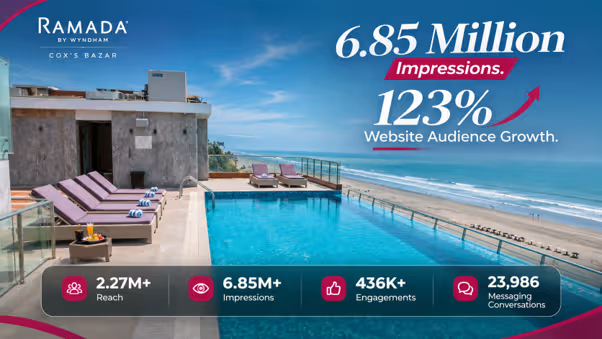
The campaign generated 6.85 million impressions, 436,037 post engagements, 23,986 messaging conversations, and 1.14 million video plays. Meanwhile, website monthly active users increased from 4,300 in May to 9,600 in September 2026, and Google organic active users peaked at 4,600 in August.
Google search snapshots also documented Ramada’s first-page visibility for selected hotel-related searches.
This is how SkyWalk approached the challenge, executed the strategy, and helped strengthen Ramada’s digital presence.
01. Project Overview: The Campaign at a Glance
| Project information | Details |
| Client | Ramada by Wyndham Cox’s Bazar |
| Industry | Hospitality & Tourism |
| Agency | SkyWalk |
| Paid marketing platform | Meta Ads |
| Organic marketing channel | SEO |
| Primary objectives | Brand Awareness & Booking Inquiries |
| Supporting objectives | Engagement, Video Views & Website Traffic |
| SEO reporting period | January–September 2026 |
| Website analytics period | May–September 2026 |
| Selected Meta campaigns | 8 |
| Advertisements included | 211 |
| Total advertising spend | $2,787.93 |
| Primary paid media outcome | 23,986 Messaging Conversations |
| Website audience growth | 123% from May to September |
| Google organic active users | 4,600 peak in August |
The central achievement: Combining large-scale digital exposure with measurable website audience growth and improved organic search visibility.
02. The Brand Journey: Bringing a Premium Hospitality Experience to the Digital Audience
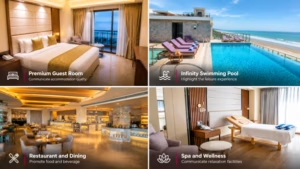
Ramada by Wyndham Cox’s Bazar is positioned as a premium hospitality destination in one of Bangladesh’s most popular tourist locations.
Located in the Kolatoli area of Cox’s Bazar, the hotel offers a range of experiences for leisure travelers, families, couples, and business guests.
Its hospitality proposition extends beyond accommodation.
The property offers:
- Premium guest room experiences.
- Rooftop infinity swimming pool.
- Spa and gym facilities.
- Food and beverage experiences.
- Conference and event facilities.
- Leisure and relaxation opportunities.
- Seasonal offers and hospitality packages.
For travelers, these facilities represent different reasons to choose the hotel.
A family might be interested in comfortable accommodation and recreational facilities. A couple might look for a relaxing getaway. Business travelers may prioritize accommodation standards, location, and convenience.
However, potential guests need to discover these offerings before they can consider making a reservation.
In the digital age, hotel discovery often begins on search engines and social media.
This created an important opportunity for Ramada.
The hotel needed a digital marketing strategy that could communicate its premium hospitality experience, increase its visibility among relevant travel audiences, and generate more direct booking inquiries.
The opportunity was to make Ramada a more visible and compelling choice throughout the traveler’s decision-making journey.
03. The Challenge: Standing Out in a Competitive Hospitality Market
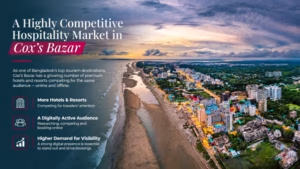
The hospitality industry is highly competitive, especially in established tourist destinations like Cox’s Bazar.
Travelers have multiple accommodation options, and their decisions are influenced by location, room facilities, pricing, guest experiences, offers, and reviews.
For Ramada, the challenge was not simply to promote rooms.
It was to communicate the complete hotel experience and remain visible when potential guests were researching accommodation.
We identified five important challenges.
Challenge 1: Increasing Brand Awareness
Ramada needed consistent digital exposure among people interested in visiting Cox’s Bazar.
The challenge was to reach relevant travelers and communicate the hotel’s facilities and experiences in a way that encouraged consideration.
Challenge 2: Communicating the Hotel Experience
Potential guests want to see what they are paying for.
They want to explore room interiors, swimming pool facilities, restaurants, spa experiences, and the overall hospitality environment.
A generic promotional message cannot communicate all these experiences effectively.
We needed visually engaging content and experience-led advertising.
Challenge 3: Generating Booking Inquiries
Social media engagement alone does not guarantee reservations.
Travelers frequently ask questions about:
- Room availability.
- Accommodation prices.
- Seasonal packages.
- Family stay offers.
- Dining facilities.
- Swimming pool and leisure facilities.
- Reservation procedures.
We needed to encourage more direct conversations between interested travelers and the hotel.
Challenge 4: Improving Organic Search Visibility
Travelers actively use Google to find hotels in Cox’s Bazar.
Searches such as “5 star hotel in Cox’s Bazar” and “best luxury hotel in Cox’s Bazar” indicate accommodation-related search intent.
Relying exclusively on paid advertising would limit the hotel’s ability to reach these users through organic search.
We identified SEO as an essential component of the long-term strategy.
Challenge 5: Creating a Connected Digital Presence
A traveler may discover the hotel through an advertisement, visit its website, search for reviews, and return later to inquire.
The hotel needed to maintain visibility across these different interactions.
Our central challenge was to connect social media discovery, website exploration, Google search visibility, and booking inquiries through one integrated digital marketing approach.
04. Our Strategic Approach: An Integrated Hospitality Growth Framework
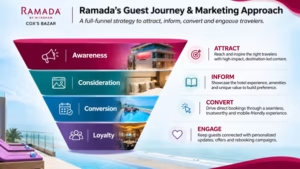
We approached Ramada’s marketing requirements through two complementary growth channels.
Paid digital marketing was responsible for expanding brand awareness, promoting the hotel’s experiences, generating engagement, and encouraging booking-related conversations.
SEO focused on improving organic search visibility and attracting potential travelers who were actively searching for accommodation and hotel-related information.
Our strategy was structured around four major activities.
A. Brand Awareness
Increase the hotel’s visibility among relevant travel audiences through experience-led advertising.
B. Engagement
Encourage people to interact with hotel content, discover its facilities, and develop interest in its offerings.
C. Booking Inquiry Generation
Generate direct messaging conversations and encourage potential guests to contact the hotel.
D. Organic Search Growth
Improve the hotel’s visibility on Google through keyword research, on-page optimization, and off-page SEO activities.
These activities supported a common objective: strengthen Ramada’s digital presence and create more opportunities for potential guests to discover and contact the property.
05. Phase One: Brand Awareness—Making Ramada More Visible to Travelers
The first stage focused on increasing the hotel’s digital visibility among relevant audiences.
We wanted potential travelers to discover Ramada while researching hotels, planning holidays, or exploring accommodation options in Cox’s Bazar.
Audience strategy
Our audience direction considered relevant travel and hospitality interests, including:
- Domestic travelers.
- People interested in Cox’s Bazar tourism.
- Family vacation planners.
- Couples and leisure travelers.
- People interested in premium hotels.
- Travelers exploring accommodation and hospitality offers.
- People interested in dining and leisure experiences.
Creative communication
We developed communication around different hotel experiences rather than relying on a single promotional message.
The creative direction included:
- Premium accommodation.
- Infinity swimming pool experiences.
- Dining and food experiences.
- Seasonal hotel offers.
- Leisure and entertainment.
- Vacation and getaway packages.
Campaign execution
Meta Ads were used to expand the hotel’s visibility through awareness and engagement campaigns.
The Meta Ads Manager dashboard includes eight selected campaigns and results from 211 advertisements.
The campaigns generated:
- 2,270,931 people reached.
- 6,859,122 impressions.
This created millions of opportunities for potential guests to discover Ramada and its hospitality offerings.
06. Phase Two: Engagement—Selling the Experience, Not Just the Room
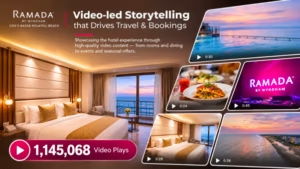
In hospitality, people do not simply purchase accommodation. They purchase experiences.
They want to imagine themselves enjoying a swimming pool, relaxing in a comfortable room, having a memorable meal, or spending quality time with family.
That is why we incorporated experience-led content and seasonal storytelling into the marketing strategy.
Seasonal and experience-led campaigns
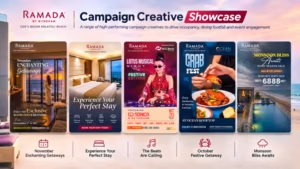
The Meta Ads dashboard highlights the following campaign themes.
November Enchanting Getaways
Positioning Ramada as a destination for seasonal vacations and memorable stays.
Experience Your Perfect Stay at Ramada
Promoting the hotel’s overall hospitality experience and accommodation facilities.
The Beats Are Calling!
Using entertainment-led communication to create audience interest.
October Festive Getaway Starts Here
Connecting hotel promotion with festive travel opportunities.
Turn Up the Heat with a Deal That’s Hot
Highlighting promotional offers and encouraging potential guests to explore available packages.
Chasing the Sun!
Promoting leisure travel and vacation experiences.
Monsoon Bliss Awaits!
Positioning the property as an attractive destination for monsoon getaways.
Why this approach mattered
Different guests have different travel motivations.
Some look for family holidays, while others want a romantic getaway, an entertainment experience, or a relaxing stay.
By highlighting different aspects of the hotel, we created more opportunities to connect with these interests.
Engagement performance
The campaigns generated:
436,037 Post Engagements
This demonstrated substantial interaction with Ramada’s digital promotional activities.
The hotel also received significant exposure through video-led communication.
The dashboard recorded:
1,145,068 Video Plays
Video content provided an effective way to showcase the property’s facilities, atmosphere, and hospitality experiences.
07. Phase Three: Booking Inquiry Generation—Turning Travel Interest into Conversations
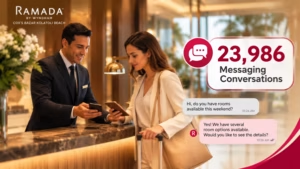
For hospitality businesses, direct communication is an important part of the booking journey.
Potential guests often have questions before making a reservation.
They may want to compare room categories, understand available packages, check prices, or confirm availability.
We therefore focused on encouraging potential guests to interact directly with the hotel.
Our inquiry generation strategy
- Promote attractive accommodation experiences.
- Highlight seasonal packages and hotel offers.
- Communicate the hotel’s facilities and services.
- Encourage messaging interactions.
- Reach relevant audiences through Meta campaigns.
- Create opportunities for potential guests to ask booking-related questions.
Why messaging mattered
A messaging conversation can represent an important step in a traveler’s decision-making process.
It gives the hotel an opportunity to respond to questions, explain available offers, and guide potential guests towards a reservation.
Campaign outcome
The Meta Ads Manager dashboard recorded:
23,986 Messaging Conversations
This was an important result because it demonstrated substantial direct interaction opportunities generated through the campaign activity.
Please note that these are platform-reported messaging conversations, not independently verified booking inquiries or completed hotel reservations.
The actual reservation contribution would need to be confirmed against the hotel’s booking and inquiry records.
08. Phase Four: SEO—Turning Google Searches into Organic Discovery
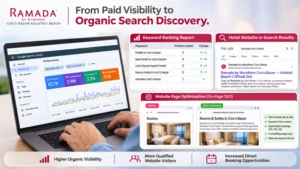
Paid advertising helped Ramada reach relevant audiences through social media.
However, potential travelers also use Google when actively searching for hotels in Cox’s Bazar.
This is where SEO became an important part of the digital marketing strategy.
Our objective was to improve Ramada’s search visibility for hotel-related and destination-specific keywords while strengthening the website’s ability to attract relevant organic traffic.
Our SEO strategy
- Keyword Research
We identified relevant search opportunities around hotel accommodation, hotel facilities, dining, offers, and Cox’s Bazar tourism.
The target keyword themes included:
- Ramada Wyndham.
- Ramada hotel offers.
- Ramada room.
- Ramada restaurant.
- Restaurant Ramada.
- Ramada food.
- Cox Bazar beach.
- Bangladesh Cox Bazar beach.
- Five-star hotel searches in Cox’s Bazar.
- On-Page SEO Optimization
We focused on improving website page relevance through keyword targeting, page titles, meta descriptions, headings, and content optimization.
- Accommodation Page Optimization
Room-related pages were important for communicating accommodation options and attracting users with room-related search intent.
- Food and Beverage SEO
We worked with restaurant and food-related keyword themes to improve the discoverability of the hotel’s dining offerings.
- Offers and Promotional Page Optimization
Hotel offer pages were included in the SEO strategy to support searches related to Ramada’s available packages and promotions.
- Off-Page SEO and Citations
The monthly SEO reports document citation and backlink placement activities from January through September 2026.
The January report includes business and location citations, while subsequent reports track keyword-focused placements directed towards relevant website pages.
The targeted website destinations included:
- Main website.
- Accommodation pages.
- Offers page.
- Restaurant and dining pages.
- Contact page.
The objective was to strengthen the website’s off-page presence while supporting relevant page discovery.
- Organic Performance Monitoring
We reviewed the available Google Analytics screenshots to understand website audience development, new users, and acquisition from Google organic search.
This helped provide a broader view of the website’s performance beyond backlink activity alone.
09. The SEO Results: From 4,300 to 9,600 Monthly Active Users
One of the most valuable findings in the SEO reports is the Google Analytics data covering May through September 2026.
The data demonstrates substantial growth in the website’s monthly active audience during this period.
Monthly Website Performance
| Month | Active users | New users | Event count |
| May 2026 | 4,300 | 4,300 | 66K |
| June 2026 | 6,500 | 6,300 | 125K |
| July 2026 | 8,300 | 8,100 | 163K |
| August 2026 | 9,600 | 9,300 | 185K |
| September 2026 | 9,600 | 9,200 | 156K |
Source: Monthly Google Analytics (GA4) screenshots in the SEO reports. Values are rounded as displayed in GA4.
123% Growth in Monthly Active Users
Website monthly active users increased from approximately 4,300 in May to 9,600 in September.
That represents approximately 123% growth over the reporting period.
This demonstrated a substantial expansion in the number of users interacting with the hotel’s website.
114% Growth in New Users
New users increased from approximately 4,300 in May to 9,200 in September.
This represented approximately 114% growth.
The result indicates that the website attracted a significantly larger audience compared with the May baseline.
Website Engagement Activity
The reported event count also increased from 66,000 in May to a peak of 185,000 in August.
This reflected an increase in recorded website activity during the period.
September recorded 156,000 events, following the August peak.
The combined results demonstrate how the website’s audience and recorded interactions developed throughout the reporting period.
10. Google Organic Search: Growing the Audience from Search Engines
Beyond total website audience growth, the Google Analytics reports also provide a more specific view of organic acquisition.
The screenshots show the Active Users by First User Source / Medium report, including Google / Organic.
Google Organic Active Users
| Month | Google / Organic active users |
| May 2026 | 1,700 |
| June 2026 | 2,300 |
| July 2026 | 2,900 |
| August 2026 | 4,600 |
| September 2026 | 3,600 |
What the data reveals
- Strong Organic Growth from May to August
Google organic active users increased from approximately 1,700 in May to 4,600 in August.
This represented approximately 171% growth.
- Organic Search Became a More Important Acquisition Channel
The Google Analytics screenshots show Google/organic as a significant first-user source throughout the reporting period.
This indicates that search engines were an important discovery channel for the hotel’s website.
- September Maintained Growth Compared with the Baseline
Google organic active users declined from 4,600 in August to 3,600 in September.
However, the September figure remained approximately 112% higher than the May baseline.
This is an important distinction: organic acquisition reached its highest recorded level in August, followed by a decline in September, rather than increasing continuously every month.
Why this mattered
For a hospitality business, organic search creates opportunities to attract users who are actively researching accommodation.
Unlike purely awareness-based advertising, search traffic can include people with specific travel and booking-related interests.
The objective of our SEO strategy was to strengthen Ramada’s discoverability when potential guests searched for relevant hotel information.
These GA4 figures represent active users attributed to Google/organic as their first-user source/medium in the SEO reports. They should not be interpreted as a direct count of organic sessions, confirmed reservations, or revenue generated by SEO.
11. Google Search Visibility: Appearing for Relevant Hotel Searches
The SEO reports also include screenshots of Google search results from July and September 2026.
These screenshots provide supporting evidence of Ramada’s visibility for specific hotel-related search queries.
Search Example 1: July 2026
Search query: “5 star hotel in Cox’s Bazar with swimming pool”
The screenshot shows Ramada’s website appearing in the organic search results, with a third-party rank overlay indicating approximately position #6.
The result highlighted Ramada’s five-star hotel positioning and swimming pool facilities.
Search Example 2: September 2026
Search query: “five star hotel in Cox’s bazar”
The September screenshot shows Ramada’s website appearing in the search results, with the rank overlay indicating approximately position #8.
Search Example 3: September 2026
Search query: “best 5 star hotel in Cox’s bazar”
The screenshot shows Ramada appearing in Google’s hotel listing results alongside other properties in Cox’s Bazar.
Search Example 4: September 2026
Search query: “best luxury hotel in Cox’s bazar”
The screenshot shows Ramada included in the hotel results and also referenced in Google’s AI Overview.
The SEO significance
These snapshots demonstrate that Ramada had achieved visibility for relevant hotel-related searches.
They also show the importance of optimizing not only branded searches but also broader accommodation-related search terms.
Search positions can vary depending on location, device, personalization, and time. Therefore, these screenshots should be read as dated examples of search visibility, not guarantees of permanent ranking positions.
12. The Paid Media Results: 6.85 Million Impressions and 23,986 Messaging Conversations
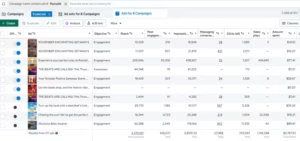
Alongside SEO, Meta advertising remained a major part of the hotel’s digital marketing strategy.
The Meta Ads Manager dashboard reports performance across eight selected campaigns and 211 advertisements.
Consolidated Meta Ads Performance
| Key Performance Indicator | Actual Result |
| Total Reach | 2,270,931 |
| Total Impressions | 6,859,122 |
| Post Engagements | 436,037 |
| Messaging Conversations | 23,986 |
| Total Clicks (All) | 293,563 |
| Video Plays | 1,145,068 |
| Total Advertising Spend | $2,787.93 |
| Selected Campaigns | 8 |
| Advertisements | 211 |
2.27 Million People Reached
The campaigns reached 2,270,931 people.
This expanded the hotel’s digital exposure among potential travelers and audiences interested in hospitality and leisure experiences.
6.85 Million Impressions
The advertisements generated 6,859,122 impressions.
This provided repeated opportunities for potential guests to discover the hotel and its offerings.
436,037 Post Engagements
The campaigns recorded 436,037 post engagements.
This reflected significant interaction with the hotel’s promotional communication.
23,986 Messaging Conversations
The campaigns generated 23,986 messaging conversations.
This created opportunities for potential guests to contact the hotel and ask about accommodation, offers, facilities, and reservations.
293,563 Total Clicks
The advertisements generated 293,563 total clicks.
This indicated substantial interaction with the campaigns and opportunities for further digital exploration.
1,145,068 Video Plays
The campaigns recorded 1,145,068 video plays.
This was particularly relevant for hospitality marketing because video can showcase the atmosphere and experience of a property more effectively than static promotional communication alone.
$2,787.93 Total Advertising Spend
The total reported Meta advertising expenditure was $2,787.93.
This provides a reference point for understanding the scale of the paid media activities.
13. Understanding Campaign Efficiency
Based on the consolidated Meta Ads dashboard, we also calculated several advertising efficiency indicators.
| Efficiency indicator | Calculated result |
| Average Frequency | 3.02 |
| All-Click CTR | 4.28% |
| Average CPM | $0.41 |
| Average Cost per Click | $0.0095 |
| Average Cost per Messaging Conversation | $0.12 |
| Engagement Rate by Reach | 19.20% |
Average Frequency: 3.02
The average frequency indicates approximately three advertisement impressions per reached person.
This supported repeated brand exposure.
All-Click CTR: 4.28%
Approximately 4.28% of total impressions resulted in clicks.
This provided an indication of audience interaction with the advertising content.
Average CPM: $0.41
The calculated average cost per thousand impressions was approximately $0.41.
Average Cost per Click: $0.0095
The calculated average advertising cost per click was approximately $0.0095.
Average Cost per Messaging Conversation: $0.12
The blended advertising spend per reported messaging conversation was approximately $0.12.
This is an average across the selected campaigns, not a cost per confirmed booking.
Engagement Rate by Reach: 19.20%
The total post engagements represented approximately 19.20% of the reported reach.
All calculated efficiency indicators use the Meta Ads Manager totals. They are not separate platform-reported figures.
14. What Made the Strategy Effective?
The campaign’s overall approach was built around combining experience-led hospitality communication with measurable digital marketing activities.
There were five important elements behind the strategy.
1. Experience-Led Creative Communication
Instead of promoting only room prices, we highlighted different aspects of the hotel experience.
This helped communicate the property’s accommodation, dining, leisure, and seasonal offerings.
2. Seasonal Campaign Planning
We used different promotional themes to connect with changing travel interests throughout the year.
This gave the brand multiple opportunities to engage potential travelers.
3. Performance-Driven Meta Advertising
The campaigns were evaluated through reach, impressions, engagement, video plays, clicks, and messaging conversations.
This provided a broader understanding of audience interactions.
4. SEO and Paid Media Working Together
Meta advertising helped introduce the hotel to relevant audiences, while SEO supported organic discovery among people searching for accommodation.
The two channels played complementary roles in strengthening the hotel’s digital presence.
5. Continuous Performance Monitoring
We reviewed campaign activity and website analytics to understand how the audience interacted with the brand and its website.
This helped create opportunities to refine the marketing approach over time.
15. What Ramada by Wyndham Cox’s Bazar Gained
The combined digital marketing and SEO strategy supported several important objectives.
Stronger Brand Awareness
The 2.27 million reach and 6.85 million impressions created substantial opportunities to strengthen Ramada’s digital visibility.
More Audience Engagement
The 436,037 post engagements reflected significant interaction with the hotel’s advertising activities.
More Direct Communication Opportunities
The 23,986 messaging conversations created opportunities for potential guests to ask questions and explore booking options.
Stronger Video Exposure
More than 1.14 million video plays helped showcase the hotel through visual storytelling.
Expanded Website Audience
Monthly active users increased from 4,300 in May to 9,600 in September.
This represented approximately 123% growth in the website’s monthly active audience.
Stronger Organic Search Acquisition
Google organic active users increased from 1,700 in May to a peak of 4,600 in August.
The September figure remained above the May baseline.
Improved Search Visibility
The Google search screenshots documented Ramada appearing on the first page for selected hotel-related searches.
Together, these outcomes demonstrate the value of combining paid media, experience-led content, and SEO within one hospitality marketing strategy.
16. Beyond Digital Visibility: The Next Opportunity for Hospitality Growth
Generating awareness and messaging conversations is an important milestone.
However, the ultimate business outcome for a hotel is confirmed reservations, room revenue, occupancy, and repeat guests.
The next opportunity is to connect digital marketing performance with the hotel’s reservation and revenue data.
1. Booking Conversion Tracking
Connect Meta advertising, Google Analytics, and the hotel’s booking system wherever technically possible.
Track:
- Booking page visits.
- Booking engine interactions.
- Reservation inquiries.
- Completed reservations.
- Booking revenue.
2. Remarketing Campaigns
Create segmented audiences based on previous interactions.
For example:
- People who watched hotel promotional videos.
- People who interacted with hotel advertisements.
- Website visitors.
- Accommodation page visitors.
- Offer page visitors.
- People who initiated booking-related inquiries.
3. Seasonal Marketing
Continue planning campaigns around high-demand travel periods, including winter vacations, Eid holidays, festive occasions, and special events.
4. Organic Search Development
Continue expanding SEO activities through:
- Relevant hotel and destination keywords.
- Accommodation page optimization.
- Local SEO.
- Google Business Profile optimization.
- Informative destination content.
- Technical SEO improvements.
- High-quality hospitality-related citations and editorial links.
5. Reservation Team Integration
Develop a process to track how messaging conversations are handled and how many progress towards confirmed reservations.
6. Business-Focused Reporting
Create an integrated dashboard combining:
- Meta Ads performance.
- Website active users.
- Organic search acquisition.
- Keyword ranking positions.
- Booking inquiries.
- Confirmed reservations.
- Return on advertising spend.
This would help move reporting beyond digital engagement and demonstrate the actual business contribution of marketing activities.
17. The Bigger Picture: Making Ramada More Visible at Every Stage of the Travel Journey
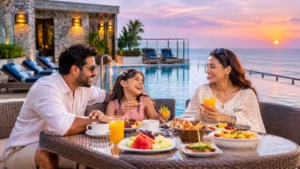
Hospitality marketing is about creating desire, building confidence, and making it easier for potential guests to take the next step.
For Ramada by Wyndham Cox’s Bazar, SkyWalk focused on strengthening the hotel’s digital presence through an integrated strategy that connected paid advertising, content-led engagement, direct messaging opportunities, and SEO.
The results tell an important story.
Paid media performance:
- 2,270,931 people reached.
- 6,859,122 impressions.
- 436,037 post engagements.
- 23,986 messaging conversations.
- 293,563 total clicks.
- 1,145,068 video plays.
Organic and website performance:
- 4,300 monthly active users in May.
- 9,600 monthly active users in September.
- 123% website audience growth.
- 1,700 Google organic active users in May.
- 4,600 Google organic active users at the August peak.
- First-page visibility documented for selected hotel-related searches.
The campaign demonstrates how an established hospitality brand can use a combination of paid and organic digital marketing to strengthen its online presence and create more opportunities to engage potential guests.
At SkyWalk, we believe hotel marketing should go beyond promoting accommodation.
It should communicate the experience, reach the right travelers, build trust, and make the journey from discovery to inquiry more convenient.
Because people don’t just book a room. They choose an experience. And our job is to make that experience worth discovering.
Want to Strengthen Your Hotel’s Digital Presence?
Are you operating a hotel, resort, or hospitality business and looking to increase brand awareness, generate more booking inquiries, and improve organic search visibility?
At SkyWalk, we develop integrated hospitality marketing strategies combining:
- Meta and Google advertising.
- Social media marketing.
- Hotel content strategy.
- Video marketing.
- Booking inquiry generation.
- Search engine optimization.
- Local SEO.
- Conversion tracking and analytics.
Our goal is to connect digital marketing activities with meaningful hospitality business outcomes.
SkyWalk | Turning Digital Opportunities into Business Growth.
Website: https://skywalk.ltd/