
Digital Marketing for UK Businesses That Need Measurable Growth
SkyWalk is a digital marketing agency for UK businesses that want their marketing to turn into qualified leads, sales and long-term customers, not just more website visitors. We work with UK founders, marketing managers and teams who need clear campaigns across SEO, Google Ads, social media, content and conversion optimisation, with a direct line between search demand and revenue.
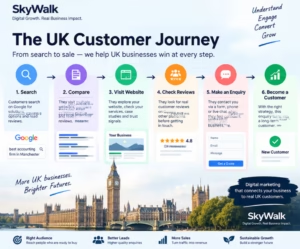
In every engagement, we map the journey from search demand → traffic → landing page → lead → customer → revenue, then decide which channels and assets need the most work. Rather than buying isolated services, UK businesses get a joined-up acquisition system: search visibility to capture intent, paid campaigns to reach ready-to-buy customers, content that answers buying questions, and landing pages built to convert.
When we first audit a UK business, we usually see one or more gaps: strong rankings but weak calls to action, busy Google Ads accounts with no meaningful conversion tracking, social content with reach but unclear offer, or analytics that count clicks but not qualified enquiries. We start by fixing measurement and landing pages so that every later SEO, PPC or social decision is based on what actually brings customers, not just what drives numbers up in a report.
Learn about why every business needs a digital marketing agency.

What Makes UK Digital Marketing Different?
Marketing a business in the UK is not just about translating messaging or copying US playbooks; it means respecting how UK consumers search, compare and buy. UK adults now spend around four and a half hours online per day, with roughly half of that time on Alphabet and Meta services such as Google, YouTube, Facebook and Instagram, which shapes how and where brands can reliably appear. Online card spending already accounts for over half of total card spending in the UK, so a large share of customer purchase journeys now pass through digital touchpoints even when the final purchase is offline.
UK shoppers tend to cross-check prices, reviews and delivery terms before committing, especially in sectors like ecommerce, professional services and travel. During the 2025 holiday period, UK shoppers spent a record £26.9 billion online, showing how quickly demand can spike and how important it is to have search, ads and landing pages ready for those high-intent windows. At the same time, research on UK ecommerce shows that a growing share of consumers spend over £100 per month online and many plan to increase that spend, so small conversion improvements can compound across a large, active audience.
Local search behaviour is also critical: Google’s own local search research highlights that many queries involve nearby information such as directions and stock availability, which influences how often UK customers expect to see local modifiers in results (like “near me”, city names or postcodes). For UK businesses, this means national visibility is rarely enough; you need to show up when someone in Manchester searches “accountant Manchester”, when a London buyer enters “IT support London” or when a Glasgow traveller searches “hotel near Glasgow Central”.
How We Build a Digital Marketing Strategy for UK Businesses
Our digital marketing strategy for UK businesses follows a clear, repeatable framework. Each stage exists to answer a practical question, and we only move forward once we have the evidence we need.
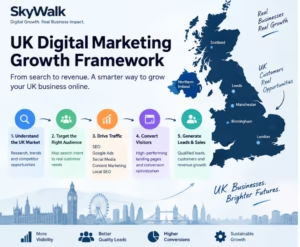
1. Study the UK Market
We start by understanding how your UK customers buy: what they search for, which platforms they use, how often they compare options, and what they worry about before choosing a supplier. We look at industry reports, search behaviour, and sector-specific trends so we know whether your audience is discovery-led (social, content) or intent-led (search, ads).
2. Map Search Intent to Revenue
Instead of chasing every keyword with volume, we classify queries by intent: research, comparison, and purchase. For a UK digital marketing agency for UK businesses, for example, “digital marketing agency UK prices” has clearer commercial intent than “what is digital marketing”, and will often sit closer to a contact or quote request. We map your service lines against these intent types so we can see which queries lead to actual revenue and which are better for awareness or education.
3. Analyze Competitors
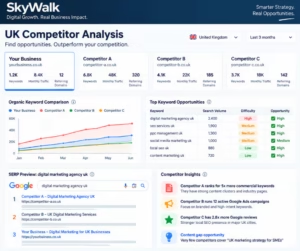
We then study UK competitors: which keywords they rank for, how their Google Ads are structured, what their landing pages promise, and how they use reviews and case studies. Competitor analysis is not just backlink counts; it includes reading the actual offer, pricing structure, guarantees, and how clearly they explain outcomes. For instance, reviewing London agency landing pages often reveals which industries they target, what minimum retainers they expect and how they frame performance.
4. Find Content and Acquisition Gaps
Next, we compare your current assets against demand and competitor coverage. Common gaps include missing service pages for high-intent keywords, no content on common objections, weak FAQ support for complex offers, or no dedicated pages for priority UK cities or regions. We prioritise gaps that sit closest to revenue—usually commercial service pages, location pages and decision-stage content.
5. Build the Acquisition System
With the gaps defined, we design the acquisition system: SEO structure, Google Ads campaigns, paid social funnels, email follow-ups and lead handling. Rather than launching everything at once, we sequence: get measurement right, build or fix key landing pages, then feed them with targeted SEO and PPC traffic. This prevents the common UK problem of paying for ads before the site is ready to convert.
6. Measure Leads and Revenue
We set up conversion tracking that matches your sales reality: contact forms with meaningful fields, phone call tracking, booked consultations and ecommerce revenue rather than generic “page views”. UK businesses often discover that their “best-performing” channel by clicks is not their best by qualified enquiries once proper tracking is in place, which changes budget allocation decisions.
7. Optimize Based on Performance
Finally, we treat campaigns as ongoing decisions rather than one-off launches. We refine keyword targeting, improve messaging, adjust bidding, update content and iterate landing pages based on what actually brings leads and customers. Over time, we build a picture of which combinations of channel, offer and audience deliver the best acquisition cost for your UK market.
SEO for UK Businesses
SEO for UK businesses is about being present when UK customers ask search engines precise questions in their own language and context. We think about UK SEO in four layers: technical health, on-page relevance, content coverage and authority in the eyes of both users and search engines.
On the technical side, we fix crawlability issues, performance problems and index gaps that stop UK pages from being fully visible, especially on mobile where most searches start. We make sure your site structure makes sense for UK visitors—clear navigation, separate pages for core services and cities where relevant, and internal links that connect informational content to commercial pages.
On-page, we align titles, headings and content with how UK searchers describe their problems. That often means using sector-specific language (“commercial property solicitor London”) and regional modifiers (“Manchester IT support”) rather than generic phrases. For local SEO UK, we optimise your Google Business Profile, ensure consistent NAP (name, address, phone) across directories, and create location pages that answer specific local intents instead of just listing cities.
Content and topical authority are built by answering the real questions buyers ask before contacting a UK digital marketing agency or any specialist provider. We prioritise topics like “digital marketing costs in the UK”, “SEO vs Google Ads for UK leads”, and sector-specific guides because data from pricing and behaviour studies shows UK businesses actively research these questions before choosing providers.
Competitor analysis in SEO goes beyond “who ranks where”. We look at which commercial pages actually receive links, how competitors structure their service explanations, and how they use FAQs, case studies and industry pages to support rankings. For example, many UK SEO agencies publish transparent pricing ranges (e.g. local SEO retainers from £400–£1,000/month and national campaigns from £1,000–£3,000/month), which helps us understand how they position their offer and which segments they are targeting.
Google Ads for UK Businesses
Google Ads in the UK give immediate access to high-intent searches, but they also make it easy to waste budget on broad or low-quality clicks. We treat Google Ads UK as a way to test positioning, capture ready-to-buy customers and learn which queries convert before committing fully to long-term SEO.
We start by dividing keywords into tight themes based on intent and geography: for example, separate campaigns for “digital marketing agency London”, “digital marketing agency Manchester” and broader “digital marketing agency for UK businesses” terms, with matching landing pages. This helps control cost per lead, especially in markets like London where average cost per click can range from roughly £2 to £8 depending on competition.
Negative keywords are critical in UK PPC management. We routinely exclude job-seeker queries (“jobs”, “careers”), student searches (“course”, “training”) and DIY intent (“how to do digital marketing yourself”) to avoid paying for clicks that rarely turn into clients. Industry guides show UK PPC management fees are often structured as 10–20% of ad spend or a fixed fee between about £500 and £2,500 per month, so clean targeting is one of the main ways to keep overall acquisition cost sustainable.
Landing pages sit at the centre of Google Ads for UK businesses. We test headlines, offers, proof points and forms against UK expectations—for instance, clear pricing ranges or minimums, transparent contract terms, and direct statements about who the service is and is not for. Experience shows that moving from a generic homepage to a focused landing page with a single call to action often improves lead quality even before we touch bids or budgets.
We track conversions at meaningful levels: enquiries by service line, booked calls, quote requests and sales, not just “contact form submitted”. This allows us to calculate cost per lead and, where possible, revenue per channel. UK businesses then decide whether to scale spend based on these metrics rather than simple click volume or impression share.
Social Media Marketing for UK Businesses
Social media marketing UK is often measured in followers and likes, but for most UK businesses those numbers are secondary. We treat social platforms—Facebook, Instagram, LinkedIn, TikTok—as ways to reach specific audiences with specific offers and move them into measurable actions.
For organic social, we focus on content that answers buying questions, showcases work and clarifies your offer, instead of generic “engagement posts”. When we review UK accounts, we often find that posts with clear value (e.g. explaining pricing decisions, showing behind-the-scenes process, answering recurring questions) generate fewer likes but more clicks and enquiries than broad “viral” content.
Paid social campaigns are structured around audiences, creative and landing pages. For B2B UK campaigns, LinkedIn and Meta often work together: LinkedIn for job-title targeting and Meta for remarketing and broader lookalike audiences. We test multiple versions of creative and offers (e.g. free audits, fixed-fee packages, outcome-focused guarantees) and feed traffic to landing pages built with mobile users in mind, given the high share of UK online time spent on mobile apps run by major platforms.
We measure success in terms of leads, trial sign-ups, bookings or sales, depending on your business, and connect social reporting to the same conversion tracking used for SEO and PPC. This avoids the common issue of social being treated as “brand-only” even when it drives substantial, trackable revenue for UK businesses.
Digital Marketing for Different UK Industries
Different UK industries have different customer journeys, search behaviours and conversion challenges. We adapt channels and messaging accordingly rather than applying a single template everywhere.
UK Small Businesses
Small local businesses—trades, clinics, local retailers, independent professional services—often rely on a mix of word-of-mouth and local search. Customers typically search phrases like “plumber near me” or “solicitor in Leeds”, compare a handful of options, check reviews and then call or submit an enquiry. Local SEO UK, Google Business Profile optimisation, Google Ads for high-intent local keywords and simple, fast mobile landing pages are usually the primary acquisition channels, while the main conversion challenge is trust and clarity rather than complex funnels.
UK Ecommerce
UK ecommerce buyers combine search, marketplace behaviour (e.g. Amazon) and social discovery. They compare prices, delivery times and returns policies before purchase, and many make multiple online purchases per month. For ecommerce, SEO and Google Shopping capture high-intent demand, while social ads and content create and retarget interest; conversion challenges often centre on checkout friction, lack of clear returns information and insufficient product proof (reviews, UGC, video).
UK SaaS
UK SaaS buyers usually conduct detailed research, compare several tools and involve multiple stakeholders. They search for specific features (“UK payroll software”), compliance needs (“GDPR-compliant CRM UK”) and industry use cases, then request demos or trials. Content marketing, SEO for comparison and solution queries, LinkedIn campaigns and retargeting are key acquisition channels, while the conversion challenge is moving prospects from interest to trial and from trial to paid plan with clear onboarding and ROI stories.
UK Professional Services
Professional services—law firms, accountants, agencies, consultants—depend heavily on reputation and clarity. Buyers search location and speciality (“family law solicitor Manchester”, “R&D tax consultant UK”), review credentials and case studies, and often have high-stakes decisions. SEO for service and location terms, Google Ads for urgent needs, and detailed service pages with FAQs and process explanations are core acquisition tools, while conversion challenges involve reducing perceived risk and showing relevant expertise without exaggeration.
UK Real Estate
Residential and commercial property in the UK is highly localised. Buyers and tenants search by area, property type and budget (“office space London Bridge”, “two-bedroom flat in Glasgow”), and often use portal sites as well as search engines. For agencies and property managers, local SEO, targeted Google Ads, retargeting and structured data for listings help reach active searchers, while conversion challenges centre on lead qualification and fast response so genuine enquiries are not lost among casual browsing.
UK Hotels and Hospitality
UK travellers combine search, map results, booking platforms and reviews when choosing hotels and hospitality venues. They compare prices, location, amenities and ratings, and often book online even for offline stays. SEO for location-plus-intent terms (“hotel near Edinburgh Waverley”), Google Ads and metasearch, local SEO and strong review management all contribute to acquisition, while conversion challenges involve seasonality, competitive pricing and communicating value beyond simple discounts.
How We Analyze UK Competitors
Competitor analysis for UK digital marketing is about understanding how others win customers, not just how many keywords or backlinks they have. For each major competitor, we look at their organic keywords, commercial pages, content gaps, backlinks, Google Ads, local SEO footprint, reviews, offers, conversion paths and positioning.
We start with search results: which pages show up for your highest-value UK queries, how those pages are structured, and what calls to action they use. Then we review content: whether competitors publish transparent pricing ranges, sector-specific guides, FAQ pages and case studies, or rely on generic copy. Pricing guides from UK agencies often reveal typical retainers—for example, single-channel SEO from roughly £500–£1,500/month for local campaigns and multi-channel packages for SMEs from around £2,000–£5,000/month—which indicates who they are targeting and how they frame value.
On the paid side, we inspect Google Ads: keyword types, ad copy, extensions, and whether they use location targeting for cities like London, Manchester or Glasgow. UK PPC management costs are commonly structured as base fees (e.g. £500–£2,500/month) plus a percentage of ad spend, so we pay close attention to how competitors balance spend across search and social to infer where they expect returns.
Reviews and offers give further clues. We look at Google reviews and third-party ratings to see what real customers praise or criticise, then compare that with the promises on landing pages. If competitors emphasise “full-service” but clients only mention one channel, that indicates a disconnect we can avoid. Positioning analysis shows which segments competitors ignore or underserve, which often creates opportunities for more focused, transparent offers.

What We’ve Learned From Working With Businesses Targeting the UK
Working on campaigns aimed at UK customers has highlighted several recurring lessons that shape how we design and optimise digital marketing for UK businesses.
Lesson 1: More traffic does not guarantee more revenue
In many UK campaigns, we have seen organic or paid traffic rise while qualified enquiries stay flat because the landing page messaging did not match search intent. When we narrowed content and ad copy to address specific UK buyer questions—such as “What does digital marketing cost for a UK SME?” or “Do you work with my industry?”—lead quality improved even if total traffic stayed similar. Insights from UK pricing guides and cost benchmarks reinforce that buyers care about clear ranges and expectations, not just general benefits.
Lesson 2: Conversion tracking changes budget decisions
Where UK businesses only tracked clicks or basic goals, channels like social and display often looked strong on paper but weak in terms of revenue. Once we implemented proper conversion tracking—forms tied to sales outcomes, call tracking, and revenue attribution—budget was frequently reallocated towards higher-intent channels such as SEO and Google Ads, aligning spend with proven acquisition rather than impressions. Industry studies on outsourcing digital marketing in the UK also emphasise the importance of outcome-focused reporting, which matches what we see in practice.
Lesson 3: Local search matters even for national offers
UK companies that serve clients across the country often assume they do not need local SEO. In reality, many prospects still search with city or region modifiers, especially for services where proximity affects trust or logistics. Market data showing high online spending combined with stable in-store behaviour indicates that hybrid journeys remain common, so being visible in both national and local results is rarely optional.
UK Digital Marketing Case Studies
At the time of writing, we are not publishing named UK case studies with specific traffic, revenue or ROAS figures because we do not disclose client data without explicit permission. Instead, we focus on sharing the type of work we do and the evidence UK businesses can expect to review in a consultation.
When we walk through past campaigns privately with prospects, we typically cover:
-
Business and industry: What the company sells and to whom.
-
Goal: Leads, sales, bookings, or another clear outcome.
-
Starting problem: For example, high traffic but low enquiries, or heavy ad spend with unclear returns.
-
What we found: Measurement gaps, weak landing pages, misaligned keywords, or missing content.
-
Strategy: Which channels we prioritised, which audiences we targeted, and how we structured offers.
-
What we changed: Specific adjustments to tracking, pages, campaigns and messaging.
-
Results: Directional improvements in lead volume or acquisition cost, described without exaggeration.
-
Lessons learned: What worked, what did not, and what we would change next time.
If you would like to see examples relevant to your industry, we can share anonymised walkthroughs during a growth audit, including screenshots and funnel diagrams where client permissions allow.
How Much Does Digital Marketing Cost for UK Businesses?
There is no single price for digital marketing in the UK; costs depend on your industry, competition, goals, geographic coverage and who you hire. Independent UK pricing guides and cost calculators show that focused single-channel services (like local SEO or basic PPC management) often start from around £500–£2,000 per month, while comprehensive multi-channel programmes frequently range from about £3,000–£15,000+ per month.
Here is a simplified view of typical UK market ranges from multiple sources (excluding ad spend for paid channels):
For most UK small and medium businesses, meaningful agency work tends to start around £1,000–£2,000 per month for one or two channels, increasing as competition and scope grow. Many guides suggest that growing UK SMEs often invest roughly £3,500–£5,000 per month on digital marketing when running multi-channel campaigns, and that total marketing budgets of 5–12% of annual revenue—with digital representing a majority—are common benchmarks.
SkyWalk’s own pricing depends on the specific mix of services, markets and targets involved. We do not publish flat packages because UK businesses vary widely, but we always explain how our fees connect to expected work hours, deliverables and measurable goals so you can compare them fairly against UK agency ranges like those above.
How to Choose a Digital Marketing Agency for Your UK Business
Choosing a digital marketing agency UK should be a structured decision, not just a reaction to polished proposals. UK guides on outsourcing digital marketing emphasise checking goals alignment, transparent pricing, reporting quality and contract terms before committing, which matches what we see in practice.
Here is a practical checklist:
-
Relevant experience: Has the agency worked with businesses that target similar UK customers, industries or price points, even if they cannot name every client publicly?
-
Actual work samples: Can they show you anonymised dashboards, landing pages, content and campaign structures rather than just claims?
-
Reporting: Do reports connect activity to qualified leads, sales or bookings, not just clicks and impressions?
-
Account ownership: Will you retain access to ad accounts, analytics, and content, even if you stop working together?
-
Measurement: Are they able to set up conversion tracking that matches your sales process and explains where revenue comes from?
-
Industry knowledge: Do they understand UK regulations, data protection and advertising rules relevant to your sector (e.g. ICO guidance on consent)?
-
Communication: Are you clear on who you will speak to, how often, and how decisions are made?
-
Strategy: Can they articulate why a particular mix of SEO, PPC, social and content suits your UK business, rather than pushing a standard package?
-
Business outcomes: Do they talk openly about what they can and cannot guarantee, and about realistic timelines for UK markets?
We encourage prospective clients to talk with more than one agency, compare how each explains their methodology and ask to see how they report results for UK businesses, so you can judge not just promises but the quality of thinking behind them.
Why UK Businesses Work With SkyWalk
UK businesses work with SkyWalk because we focus on how UK customers actually search, compare and buy, and we build campaigns around that behaviour. Our work combines UK-focused SEO, PPC, social media, content and conversion optimisation with transparent reporting and clear links between activity and outcomes.
We operate our delivery team from Bangladesh, which keeps overheads lower, but our planning and methodology are built around UK search behaviour, cost structures and competitive dynamics. Market data on UK digital marketing costs and budgets informs our recommendations, so we can help you decide where a £2,000/month versus a £5,000+/month programme would realistically place you in your competitive set.
Our point of view is simple: traffic alone is not a useful goal; search intent matters more than keyword volume; landing pages decide whether paid acquisition works; SEO and PPC should inform each other; competitor analysis should include offers and positioning, not just rankings; and conversion tracking is the foundation of every serious marketing decision. This perspective comes from repeatedly seeing UK businesses overspend on broad activity while underinvesting in measurement and conversion, and from watching how small, intent-led changes can shift results.
Learn more about our remote marketing service for UK business.
Frequently Asked Questions
What does a digital marketing agency do for a UK business?
A UK digital marketing agency helps your business appear where UK customers are searching and spending time online, then turns that visibility into enquiries and sales through SEO, Google Ads, social media, content and conversion optimisation. Channels and tactics are chosen based on your industry, competition and budget, guided by how UK consumers currently split their card spending between online and offline and how much time they spend on platforms like Google, Facebook and Instagram.
How much does digital marketing cost in the UK?
Market guides show that UK digital marketing costs typically range from around £500–£2,000 per month for single-channel services (local SEO, basic PPC) to roughly £3,000–£15,000+ per month for fuller multi-channel programmes, with growing SMEs often investing £3,500–£5,000 per month. Your actual cost depends on your goals, competition, sectors and whether you hire a freelancer, small agency or larger firm.
How long does SEO take for a UK business?
UK SEO rarely produces meaningful results overnight. Pricing and time-to-results data for London and UK-wide campaigns suggest that local SEO often takes 3–6 months to show clear movement, while national and highly competitive sectors can take longer, especially where extensive content and link-building are required. The timeline depends on your starting point (technical health, content, authority) and competition level.
Is SEO or Google Ads better for a UK business?
SEO and Google Ads serve different but complementary roles. Google Ads UK can generate leads quickly by placing you in front of high-intent searches, while SEO builds sustainable visibility and compounding returns over time. Cost studies show that PPC management is typically charged as a percentage of ad spend or a fixed fee, whereas SEO is billed as an ongoing retainer, so many UK businesses use Google Ads to test and scale winning offers while investing in SEO for long-term growth.
How do I choose a digital marketing agency in the UK?
Start with clarity on goals and budget, then assess agencies on relevant experience with UK markets, transparency of pricing, quality of reporting and contract terms. UK guidance on outsourcing digital marketing emphasises checking that an agency understands your objectives, provides outcome-focused reporting, and avoids long, inflexible lock-ins without clear value. Ask to see anonymised examples of their work, including landing pages and dashboards, and confirm you will own your accounts.
How do you measure digital marketing ROI?
We measure digital marketing ROI by tracking the full path from click or visit to lead, sale or booking, then comparing revenue or lifetime value against campaign and service costs. This requires accurate conversion tracking (forms, calls, transactions) and clear reporting that links channels to outcomes, something UK cost and outsourcing guides highlight as essential for effective decision-making.
Do UK businesses need local SEO?
Most UK businesses benefit from local SEO, even if they serve customers nationally. Online spending now represents a substantial share of total card spending and many searches include local intent, so appearing in map results, local packs and city-specific queries increases trust and visibility when buyers look for nearby providers.
How do you research UK competitors?
We research UK competitors by analysing their search rankings, commercial pages, content, Google Ads, reviews and pricing, using publicly available data and tools. Pricing guides and cost breakdowns from UK agencies help us understand typical retainers and packages, while SERP and ad reviews show how competitors frame their offers for cities like London, Manchester or Glasgow.
What should be included in a digital marketing report?
A useful digital marketing report for UK businesses should include: activity run per channel, key metrics (impressions, clicks, conversions), cost per lead or sale, attribution of leads to channels and campaigns, and insights on what will change next. UK outsourcing guides suggest avoiding reports that only show vanity metrics and instead demanding outcome-focused reporting tied to goals.
Can an agency manage marketing across multiple UK cities?
Yes, agencies can manage campaigns that target multiple UK cities and regions by using location-based SEO, Google Ads geo-targeting and city-specific landing pages. Pricing and performance data from London and other UK regions show that costs and competition vary by location, so campaigns are usually tailored per city to balance reach and acquisition cost.
Get a Digital Marketing Growth Audit for Your UK Business
If you are considering hiring a digital marketing agency for UK businesses or changing your current setup, a focused growth audit is one of the most useful starting points. Rather than a generic proposal, we review your current SEO, Google Ads, social, content and analytics against how UK customers actually search and buy, then highlight practical opportunities and risks.
A SkyWalk UK Digital Marketing Growth Audit typically includes:
-
SEO opportunities: Technical issues, missing pages, and intent-driven keywords that matter for UK buyers.
-
Competitor gaps: Where competitors outperform you in search, ads or content, and where they leave opportunities open.
-
Paid advertising opportunities: Campaign structures and keyword themes that could drive profitable UK leads, plus areas of waste in current PPC.
-
Content gaps: Topics and formats (guides, FAQs, industry pages) that support UK decision-making but are missing or weak on your site.
-
Conversion issues: Landing page problems, unclear offers, or tracking gaps that block accurate measurement of leads and sales.
-
Priority actions: A short list of realistic steps ordered by impact and complexity, so you know what to tackle first.
We do not promise overnight transformations or guaranteed rankings. Instead, we offer a clear view of where your UK digital marketing stands today and what changes are most likely to improve acquisition and revenue over the coming months.
Learn more about the real cost of not hiring a digital marketing agency. and offshore digital marketing agency for Uk business.
Also learn about offshore vs local marketing agency.
Sources and referrences:
- https://www.ons.gov.uk/economy/nationalaccounts/balanceofpayments/articles/consumercardspendingecommerceanddigitaltradeinsightsintheuk/2019to2025
- https://www.advanced-television.com/2025/12/10/ofcom-half-of-uk-online-time-spent-on-alphabet-meta-services/
- https://www.doofinder.com/en/blog/uk-ecommerce-statistics
- https://business.adobe.com/uk/blog/uk-online-retail-spending-hits-record-high
- https://www.thinkwithgoogle.com/_qs/documents/2915/Google_Local_Search_Behavior_UK_2015_1.pdf
- https://www.spglobal.com/market-intelligence/en/news-insights/research/2026/02/state-of-the-uk-digital-economy-2026
- https://store.mintel.com/report/uk-online-retailing-market-report
- https://wise.com/gb/blog/cost-of-outsourcing-digital-marketing
- https://asquareaidigitallabs.co.uk/blog/digital-marketing-cost-london
- https://www.expertsure.com/uk/digital-marketing/digital-marketing-agency-costs/
- https://whito.co.uk/research/uk-marketing-cost-index/
- https://whitehat-seo.co.uk/digital-services-pricing
- https://ukagencies.co.uk/blog/how-much-does-digital-marketing-agency-cost-uk/
- https://redeagle.tech/blog/how-much-does-seo-cost-uk
- https://blackfiremarketing.co.uk/blog/digital-marketing-agency-cost-uk.html
- https://www.fibre2fashion.com/news/retail-industry/half-of-uk-adults-keep-in-store-spending-unchanged-in-2025-survey-308489-newsdetails.htm
- https://elitedigitalagency.io/blog/digital-marketing-agency-prices-uk/
- https://www.sidekickaccounting.co.uk/insights/digital-marketing-agency-pricing-guide
- https://www.mediaworks.co.uk/insights/top-10-takeaways-ofcom-report-2025
- https://www.expertsure.com/tools/digital-marketing/digital-marketing-agency-cost-calculator/
- https://www.eraofdigitalmarketing.com/blog/how-much-does-digital-marketing-cost-in-the-usa-uk-and-netherlands-2026-guide
- https://exposureninja.com/blog/spend-on-digital-marketing/
- https://www.visuosofts.com/blog-post.php?slug=digital-marketing-agency-uk-the-complete-2026-guide
- https://www.ecommercescotland.com/ecommerce-statistics
- https://www.fibre2fashion.com/news/company-news/retail-industry/half-of-uk-adults-keep-in-store-spending-unchanged-in-2025-survey-308489-newsdetails.htm
- https://www.expertmarketresearch.com/reports/united-kingdom-online-consumer-behavior-trends
- https://www.askattest.com/wp-content/uploads/2025/01/UK-Consumer-Trends-2025_digital_v5.pdf
- https://www.askattest.com/blog/articles/2025-uk-consumer-trends-report
- https://www.linkedin.com/posts/fibre2fashion_half-of-uk-adults-keep-in-store-spending-activity-7429825513474551809-EIS3